
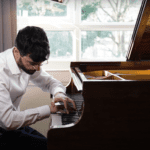
 TRIAL LESSON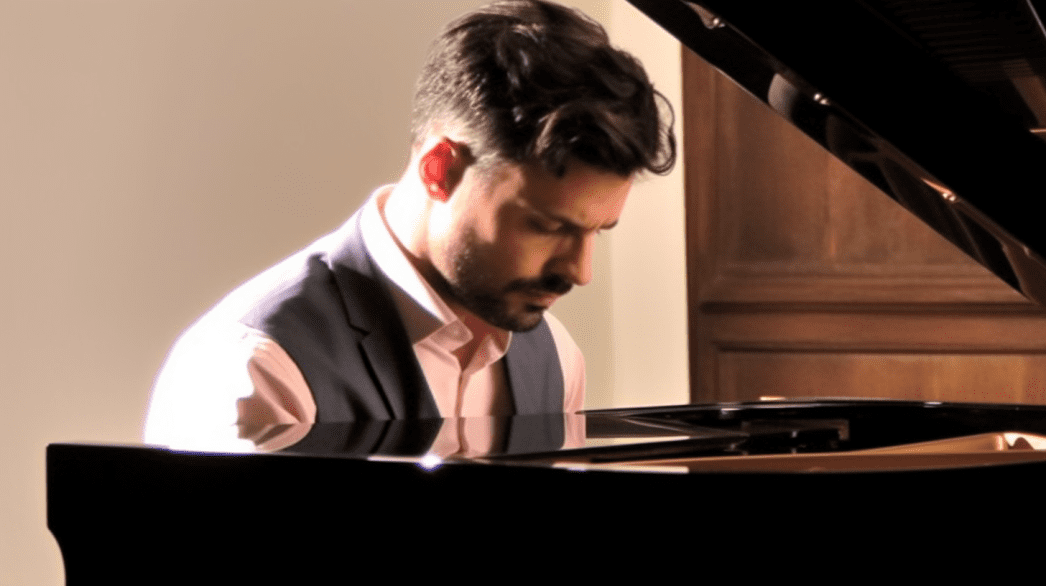
Starting piano lessons for the first time?
At WKMT, we ensure your first lessons are memorable. Our welcoming approach makes beginners feel right at home, whether in our London piano institute or via online piano lessons. We believe everyone deserves to find the right piano teacher to start their musical journey.
We specialize in fostering musical education for students of all ages and skill levels, from complete beginners to advanced students seeking to master their instrument performance.
Piano lessons London: Music is about sharing, and at WKMT London, we curate captivating events designed to inspire and connect like-minded individuals.
Our Music Events are perfect for adults in London who appreciate the beauty of music but work in other fields.
Our carefully crafted events provide unique opportunities for these sensitive souls to meet, share their passion, and enjoy music together.
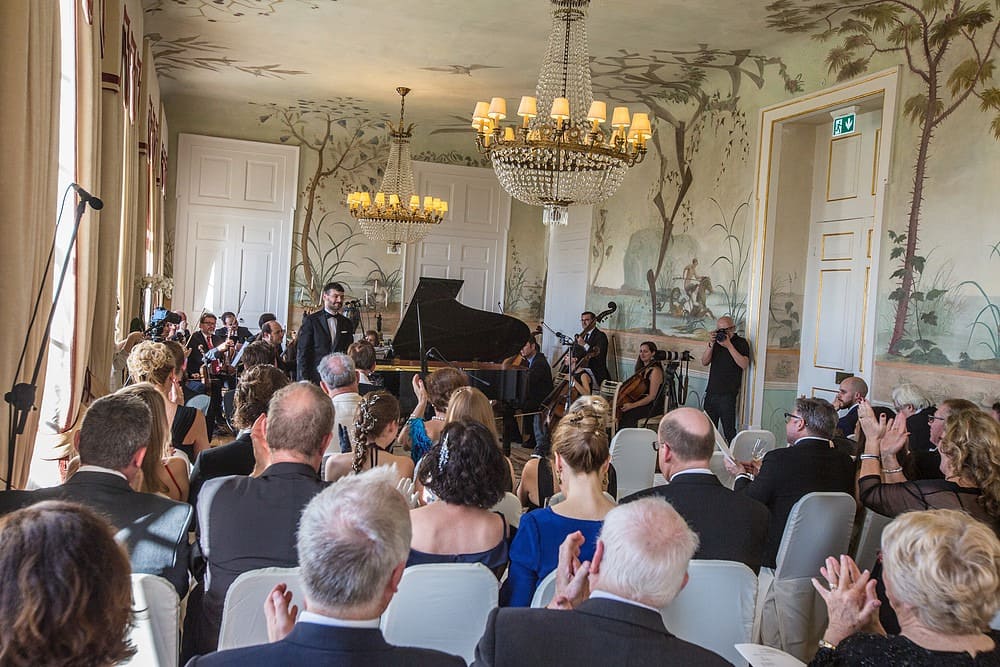
Join us for elegant Music Soirées at our studios
Attend meticulously selected concerts in London’s most prestigious venues
Participate in London Student Festivals, where you can showcase your talent in an intimate concert setting.
The crown jewel of our Music Events is the unforgettable retreats at WKMT Galicia in Santa Emilia, Spain. These immersive music experiences in a picturesque setting allow you to fully embrace the joy of music, deepening your connection with fellow enthusiasts.
Discover the transformative power of our Music Events
Immerse yourself in a world of inspiration, camaraderie, and musical excellence.
At WKMT, we believe that music is not just about learning; it’s about sharing experiences and passion. This is why we curate captivating music events in London—perfect for adults from Central London and beyond who love music but pursue careers in various other fields.
We invite you to join our community, where piano tutors and students alike share their journey and grow together.
Whether you’re experiencing your first piano lesson or looking to enhance your jazz piano chops, our private lessons cater to your personal musical interests. Our private tutors are not only seasoned professionals with years of teaching experience but also compassionate mentors dedicated to your growth.
EXPERIENCE PREMIERE KEYBOARD INSTRUCTION AND ENGAGING MUSICAL EVENTS
Piano Lessons London by WKMT
Every note you play is a step on your artistic journey. That’s why our piano classes are personalized, whether you’re a young child starting out or an adult returning to a cherished hobby. We cover different styles—from the disciplined precision of classical piano to the creative flair of pop and jazz music.
MUSIC LESSONS IN LONDON
Our keyboard lessons, finely tuned to your musical goals
ALL AGES
Piano lessons for CHILDREN
Nurturing Young Talent
Ignite your child’s passion with keyboard lessons that build foundational skills and instill a love for music theory and piano skills.
Our friendly and patient instructors create a fun and supportive environment where children can explore their musical potential.
Watch your child’s confidence grow as they learn to play their favourite tunes!
Piano lessons for ADULTS
Unleash Your Inner Musician
Discover the delight of music with our customised instrument lessons for adults; whether it’s your first time at the keys or you’re an experienced pianist.
Whether you’re a novice or a seasoned pianist, our skilled teachers will steer you on your musical adventure.
Feel the excitement of conquering a new piece!
ALL LEVELS
Piano lessons for BEGINNERS
Begin Your Mastery
Never touched a piano before? No problem! Our beginner-friendly lessons are designed to get you comfortable with the basics.
Learn to read music, understand rhythm, and play simple melodies in a relaxed and supportive setting.
Start your musical journey with us today!
Piano lessons for INTERMEDIATE students
Take Your Skills to the Next Level
Ready to challenge yourself? Our piano lessons for intermediate students are designed to push your boundaries and refine your skills.
Dive deeper into music theory, improve your sight-reading, and explore new genres.
Our experienced instructors will guide you through more complex pieces, helping you to develop your own unique style and expression.
Piano lessons for ADVANCED students
Master the Art of Piano
As an advanced student, you’re ready to explore the intricacies of piano playing.
Our advanced piano lessons will help you master complex techniques, interpret challenging pieces, and express yourself through sound.
Challenge yourself with advanced piano lessons designed to refine your finger technique and deepen your understanding of chord progressions and sheet music
Learn from our experienced instructors who will challenge you to reach your full potential. Whether you’re preparing for a performance or simply want to perfect your skills, our advanced lessons will take your piano playing to the highest level.
ALL STYLES
CLASSICAL
Unleash Your Inner Mozart
Dive into the rich tradition of classical music with our tailored lessons.
Whether you’re a beginner or an experienced pianist, our expert instructors will guide you through the nuances of classical pieces from renowned composers.
Develop your technique, interpretation, and performance skills, and discover the timeless beauty of classical piano. Discover the power of sound.
POP
Master the Hits
Get in tune with the contemporary music scene with our pop keyboard lessons.
Learn to play your favourite songs, understand common chord progressions used in pop music, and even compose your own catchy tunes.
Learn to write your own pieces with lessons tailored to popular styles.
Our lessons are thoughtfully crafted to guide you on a journey towards becoming a versatile pianist. We focus on equipping to play the tunes you love.
JAZZ
Improvise with Jazz
Embrace improvisation and rhythm in jazz piano classes, perfect for jazz lovers and aspiring musicians.
Our Jazz keyboard classes are graded and professionally tailored for students of all levels and ages.
Learn chord progressions, jazz standards and gain confidence in your ability to create music.
At WKMT London, we take pride in offering the finest London piano lessons. Our dedicated team of experienced and passionate instructors ensures that every student receives personalized attention, allowing them to unlock their full musical potential. Whether you’re a complete beginner or an advanced player, we’re here to help you take your keyboard skill levels to new heights.
If you have any enquiries about our piano tuition in London, please don’t hesitate to get in touch with our friendly and knowledgeable team.
We understand that each student is unique, and we are more than happy to discuss your individual needs and goals. By reaching out to us, you are taking the first step towards an enriching and rewarding musical journey with WKMT London.
With WKMT London, you choose a music school with a proven track record. Our professional pianists and advanced level instructors bring a wealth of experience from prestigious institutions like the Royal Academy of Music and the Royal College of Music. They are not just teachers; they are active performers and professional musicians ready to guide you, whether it’s in-person in our London studios or through online piano lessons.
Remember, when it comes to piano lesson London, WKMT is your go-to destination for quality, expertise, and a nurturing learning environment. So why wait any longer? Contact us today to explore the world of piano and discover the many benefits of learning with the best in the business. Let’s make beautiful music together!
Working hours: Monday to Sunday 9 am to 9 pm (London-Time)
+442071014479
THREE LONDON STUDIOS
Our London Studios: A Haven for Keyboard Enthusiasts
We have strategically located our studios in West Kensington, Camberwell, and Bermondsey to serve as your musical havens.
They are not just places for piano tuition; they are spaces where classical pianists and those passionate about jazz and pop can flourish. Here, WKMT becomes your musical home away from home.
CAMBERWELL STUDIO
Piano lessons South East London by WKMT
WKMT Camberwell is based just one minute walk from Burgess Park. This is the perfect music school for people based in Walworth, Lambeth, Peckham, Brixton, Dulwich, Clapham Stretham.
Our nearby schools are:
John Ruskin Primary School, St. George’s C of E Primary School, Oliver Goldsmith Primary, Crawford Primary, Lyndhurst Primary, The Highshore, Crowford Primary, Herne Hill, The Charter, Bessemer Grange.
WEST KENSINGTON STUDIO
Piano lessons West Central London by WKMT
WKMT Kensington is based just one minute walk from West Kensington Tube Station. This music school is at the reach of people based in Fulham, Hammersmith, South Kensington, Kensington High Street, Putney, Chelsea, Earl’s Court, Shepherd’s Bush, Battersea…
Our nearby schools are:
St. James Preparatory, West London Free School Primary, West London Free School Sixth Form, Fulham Prep School, The London Oratory School, Hollan Park School, Thomas Kensington London Day School, Keyboard.
BERMONDSEY STUDIO
Piano lessons Central East London by WKMT
WKMT Bermondsey is based just five minutes walk from Bermondsey Tube Station. This studio is near Canary Wharf, Canada Water, Lewisham, City of London, Deptford, Mile End, Bromley, Greenwich… for your music lesson. Keyboard lessons central London.
Our nearby schools are:
St. James’ Primary., Compass, Southwark Park Primary, Harris Academy, Galleywall Primary, Phoenix Primary, Rotherhithe Primary, Ilderton Primary.
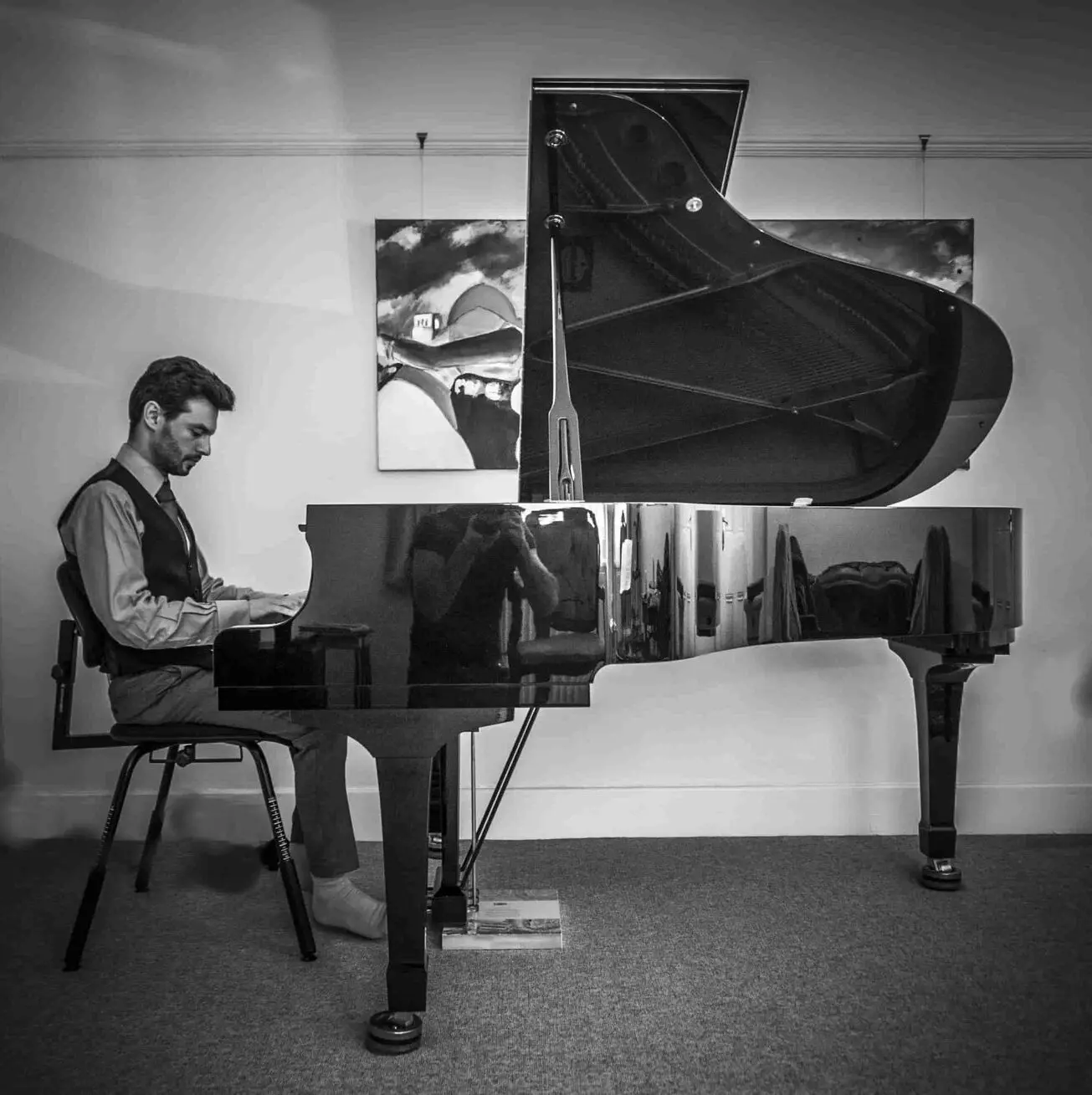
Juan Rezzuto
WKMT Founder & Director
With over a decade of experience in nurturing musical creativity, and keyboard performance, WKMT London provides unparalleled music lessons in London. Our esteemed director and founder, a dynamic London composer and concert pianist from Buenos Aires, brings a truly revolutionary approach to music education.
As a professional equestrian rider and classical architecture enthusiast, Juan Rezzuto expertly manages and supports artists from across the globe. His extensive experience and refined education make him the perfect mentor for those seeking to dive deep into the vibrant and inspiring realm of sound.
By choosing WKMT, you can rest assured that your keyboard lessons in London will be conducted professionally and tailored to your needs. Our team’s commitment to excellence ensures that every student benefits from a comprehensive and engaging learning experience. Don’t miss this opportunity to learn from the best in the industry; contact us today to begin your musical journey with WKMT’s exceptional keyboard instruction.
HEAR IT FROM OUR STUDENTS
Our Students' Journey in Music
At WKMT, music lessons are more than just private piano lessons; they are a comprehensive learning experience.
Whether it’s mastering acoustic piano or digital keyboard, our London sound academy nurtures every aspect of your instrument playing. We enrich your lessons with years of experience and advanced teaching styles.
Our holistic approach extends beyond private lessons. We offer masterclasses and engaging music camps & courses.
Whether it’s for young children or adults, everyone gets the chance to develop their piano skills and musical interests. Our online piano teachers also ensure that your learning experience isn’t bound by geography.
As part of our commitment to your musical journey, we guide our piano students through piano exams and provide ample performance opportunities.
It’s here where the skill levels of our students truly shine. We prepare you not just for the exams but to become professional musicians, whether it’s for an audience in London or for personal satisfaction.
Social media platforms serve as a bridge between our piano school and you.
Follow us to stay updated with our London music events and see the successes of our students. We encourage our piano student community to engage with us and each other, fostering an environment that celebrates every piano performance.
Ready to embark on your musical journey with WKMT?
Contact our London piano teachers today and schedule your first piano lesson. We welcome students of every age, from younger children to adults, and at every level, from complete beginners to those with previous experience.
ARE YOU READY FOR YOUR FIRST PIANO LESSON IN LONDON?
If you are ready to go for a trial lesson with us,
please do not hesitate in
calling us to:
(UK)
+442071014479
International – WhatsApp
+447514272027
Our offices are open Monday to Sunday
from
9 am to 9 pm GMT.
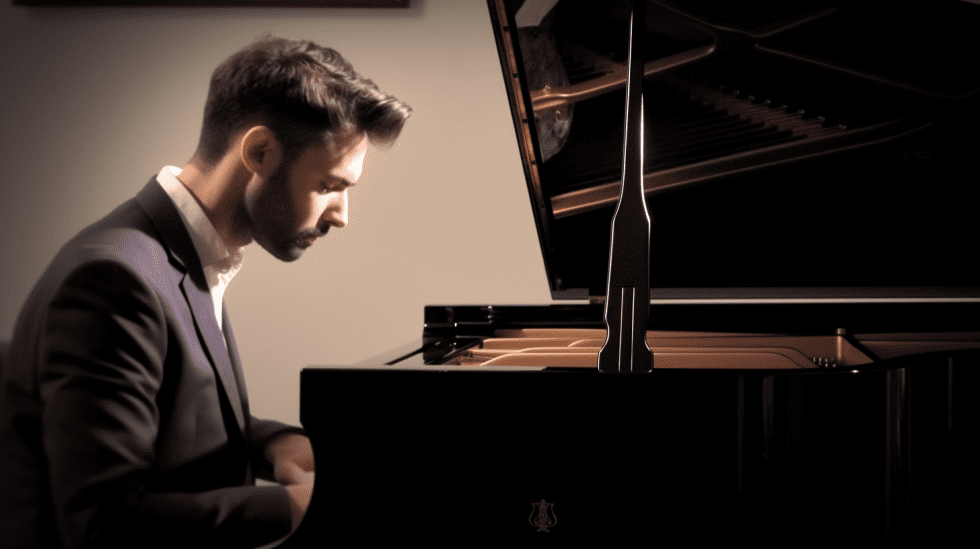
DIVE INTO OUR WORLD
Latest Insights from London's Premier Music Lessons Blog

Most famous jazz musicians of the 1920s music world
Famous Jazz Musicians 1920s – Who are the most famous Jazz musicians from 1920s? Introduction to Famous Jazz Musicians 1920s The origins of jazz trace back to the early 20th […]

The 25 Most Influential Blind Pianists and Musicians
Famous Blind Piano Players – The 25 Most Influential Blind Pianists and Musicians Introduction to the Famous Blind Piano Players In the dynamic world of music, the extraordinary […]
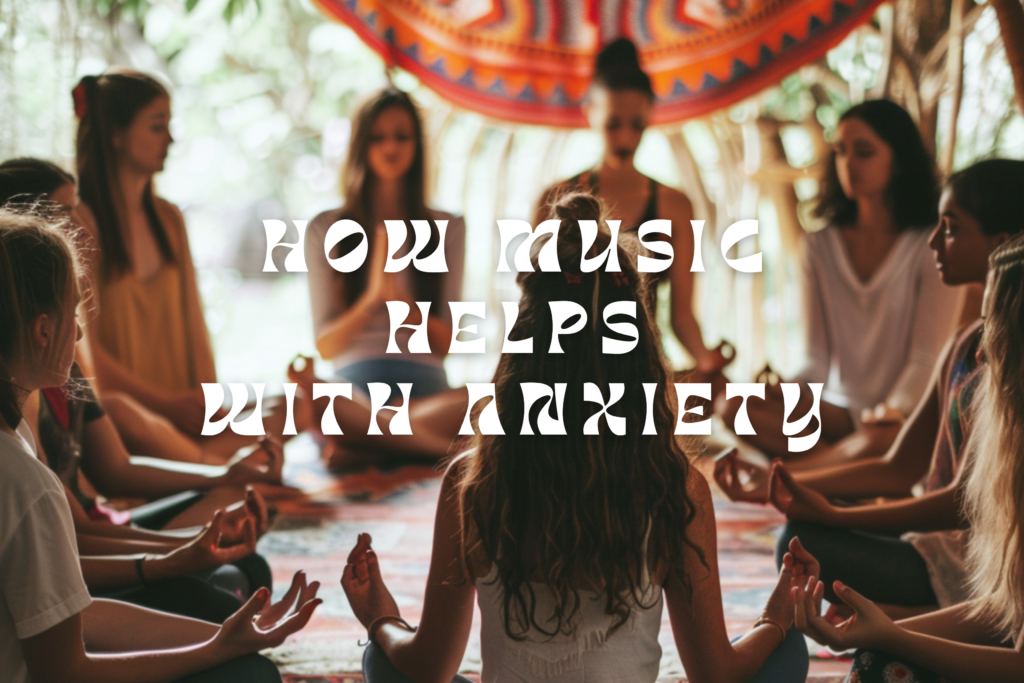
How Music Helps to Reduce Mental Stress and Anxiety
What music helps with anxiety – How Music Helps to Reduce Mental Stress and Anxiety? Today, amid races and fretting, wherein stress and the feeling of alarm are inescapable, […]
London Areas
Dulwich, Clapham, South East London, West Kensington, Canary Wharf, Earls Court, Chelsea, Streatham, Brixton, Hammersmith, Fulham, Shepherd’s Bush, South Kensington, Marylebone, Kensington, Belgravia, Soho, Holland Park, Maida Vale, Mayfair, Pimlico, Chiswick, Victoria, East London, Croydon, Richmond, City of London, Westminster, Knightsbridge, Marble Arch, Covent Garden, Holborn, Bayswater, Acton, Wimbledon, Lewisham, Putney, Stanmore, Hampstead, Greenwich, Ealing, Wembley, Notting Hill, Peckham, Paddington, Wandsworth, Parsons Green, Kilburn, Forest Hill, Balham, Waterloo, Isleworth, Hounslow, Camden, Islington, Barnes, Edgeware, Hillingdon, Walthamstow, Harrow, Crouch End, Finchley, Barnet, Ilford, Muswell Hill, Tooting, Bromley, and more
Dulwich, Clapham, South East London, West Kensington, Canary Wharf, Earls Court, Chelsea, Streatham, Brixton, Hammersmith, Fulham, Shepherd’s Bush, South Kensington, Marylebone, Kensington, Belgravia, Soho, Holland Park, Maida Vale, Mayfair, Pimlico, Chiswick, Victoria, East London, Croydon, Richmond, City of London, Westminster, Knightsbridge, Marble Arch, Covent Garden, Holborn, Bayswater, Acton, Wimbledon, Lewisham, Putney, Stanmore, Hampstead, Greenwich, Ealing, Wembley, Notting Hill, Peckham, Paddington, Wandsworth, Parsons Green, Kilburn, Forest Hill, Balham, Waterloo, Isleworth, Hounslow, Camden, Islington, Barnes, Edgeware, Hillingdon, Walthamstow, Harrow, Crouch End, Finchley, Barnet, Ilford, Muswell Hill, Tooting, Bromley, and more